The Search That Feels Like the Problem
Type "Morgan Buildings supplier" into a browser and you get a page of results that all look the same. A handful of manufacturers. A couple of sourcing directories. Some listing sites with "verified" badges. It feels like the hard part is picking one.
That's what I thought back in 2017, anyway. I'd been handling modular building orders for a couple of years at that point. I'd built a shortlist, compared quotes line by line, and felt like I'd done the work.
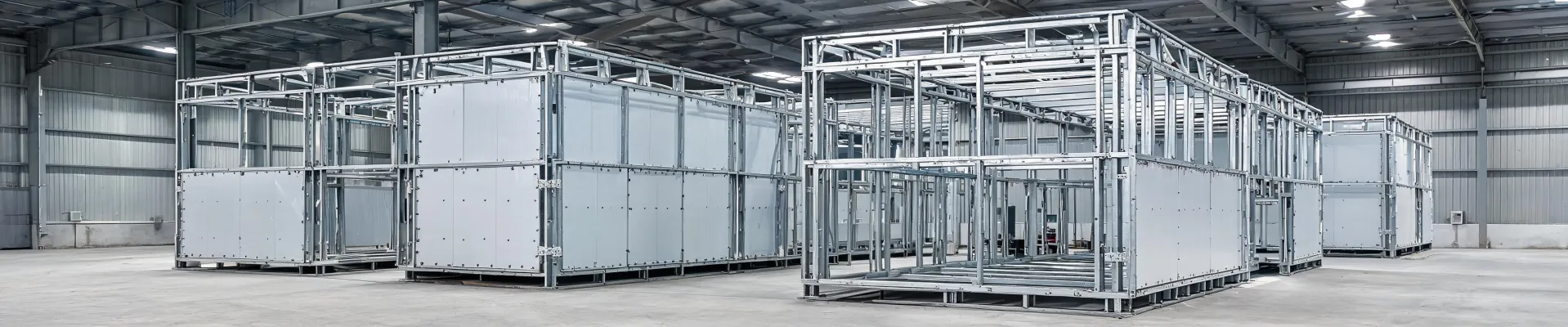
Then a 6-bay Euro modular building order (the type with the two-story stacking option) came in at $4,800 over budget after delivery. The structure was fine. The problem was that I'd picked a supplier whose interpretation of "6-bay Euro modular" didn't match mine — mine included floor stiffening for a second level; theirs assumed ground level only.
Looking back, the search wasn't the hard part. The hard part was that neither of us knew we were describing two different buildings.
What's Actually Going Wrong
It's not price. It's capability mismatch.
Here's the thing that took me years to internalize: when two suppliers both list "3D modular building" on their site, they might be building entirely different things. One might mean volumetric modules — the ones that arrive as finished boxes. The other might be a steel-frame fabricator that calls any panelized unit "modular."
It's tempting to think you can just compare quotes. But identical-sounding specs from different vendors can result in wildly different outcomes (this is the part that bit me in 2021, on a $3,200 order that needed secondary steel the quote never mentioned).
From the outside, it looks like suppliers are competing on price. What you don't see is which of them has the certification, tooling, and transport logistics to actually deliver a 6-bay Euro modular building to your site without treating it as a custom one-off — and charging you accordingly.
The procurement process itself is the gap.
We didn't have a formal specification review before sending out RFQs. Cost us when a 2021 order arrived with steel columns that didn't meet the local wind-load requirement — the supplier had quoted to a different standard and neither of us caught it in the email thread.
The ICC/MBI 1200-2021 standard gives modular construction a shared regulatory language, but adoption across U.S. jurisdictions is still uneven (as of 2024, various states remain in transition). That means "compliant" can mean two different things depending on where your site sits — and which code cycle your supplier is building to.
The third time a mismatch like this happened, I finally built a pre-check list. Should have done it after the first time. But I kept treating each situation as unique, when really the same four failure modes kept repeating.
What Those Mistakes Actually Cost
I'll give you the specific numbers, because "it costs money" is useless.
- The 6-bay Euro modular building order (September 2022): $4,800 in rework plus a 3-week delay. The delay hurt more — we lost the original site access window and had to rebook the crane.
- The 2021 steel-frame mix-up: $3,200 in additional fabrication and shipping, plus 11 days of production delay. I'd quoted the client based on the original number, so that gap came out of nowhere.
- The 2023 temporary house vs modular building comparison: $5,200 lost because I compared a temporary house quote to a modular building quote without realizing the two categories have different permitting pathways in our county. Two weeks of negotiation with the client after the fact.
If I total up the documented messes from 2017 through 2024, it's roughly $47,000 in wasted budget. Some of that was learning. Some of it was me skipping steps because I'd "done this before."
That's the trap. Every one of those mistakes happened because I was confident. I'd handled enough orders to know the rhythm, and the rhythm made me skip the checklist.
Looking back, I should have paid for a proper spec review on the 2022 order. At the time, it looked like a $400 line item I didn't need. It would have saved $4,800.
The Quiet Shift Most Buyers Miss
What worked in 2019 doesn't work the same way in 2025. When I started, you could call three regional suppliers, compare their PDFs, and land on a reasonable choice. The volume of modular building spec types has grown — 3D modular units, hybrid steel-frame, relocatable temporary structures — and each category now has its own supplier ecosystem with its own conventions for scoping.
The fundamentals haven't changed (you still need to compare capability, not just quote). But the execution has. Supplier matching is less about finding someone who builds "modular buildings" and more about matching your specific application to a supplier whose actual production line handles that unit type at scale.
In my opinion, that's the real shift. The phone-book approach doesn't fail loudly. It just quietly hands you a supplier whose scope stops two clauses before yours begins.
What I Do Now (Brief Version)
The fix isn't complicated. It's a four-question pre-check before any RFQ goes out:
- What unit category is this actually — 3D volumetric, panelized, or steel-frame with modular cladding?
- What's the site jurisdiction, and does the supplier's certification cover that code cycle?
- What's included in scope — primary structure, secondary steel, MEP rough-in, transport, offload?
- What's the realistic delivery buffer, and what's the supplier's actual on-time record for units like this one?
We've caught 47 potential mismatches using this checklist in the past 18 months. The biggest catch was a supplier whose "6-bay Euro modular" quote didn't include corner castings — a $6,900 surprise if we hadn't flagged it before signature.
If you're handling Morgan Buildings sourcing or supplier matching for a procurement team, we probably have similar scars. What's your first checkpoint before you send an RFQ?