-
What's not on the quote is where the money actually goes
-
Spec sheets are shockingly good at meaning different things
-
Why "Morgan Buildings sourcing" keeps showing up in my search history
-
The counterargument, and the time it almost landed on me
-
How I actually evaluate modular vendors now
-
A terminology detour I burned half a day on
-
The part I keep coming back to
Here's my position after nearly four years running facility procurement: the lowest modular building quote I've approved has never been the one that saved us the most money. Not once.
I'm the office administrator for a 140-person company. I own the full procurement stack—paper, furniture, and last year, a 6-bay Euro modular building for a temporary site office. Roughly $410K annually across eight vendors. I report to operations on one side and finance on the other, which means I get squeezed between "make it fast" and "explain this invoice" pretty much every quarter.
I'm not a modular building specialist. I'm a buyer who's been asked to buy modular buildings. That distinction matters because most of the advice out there is written by people who sell them.
What's not on the quote is where the money actually goes
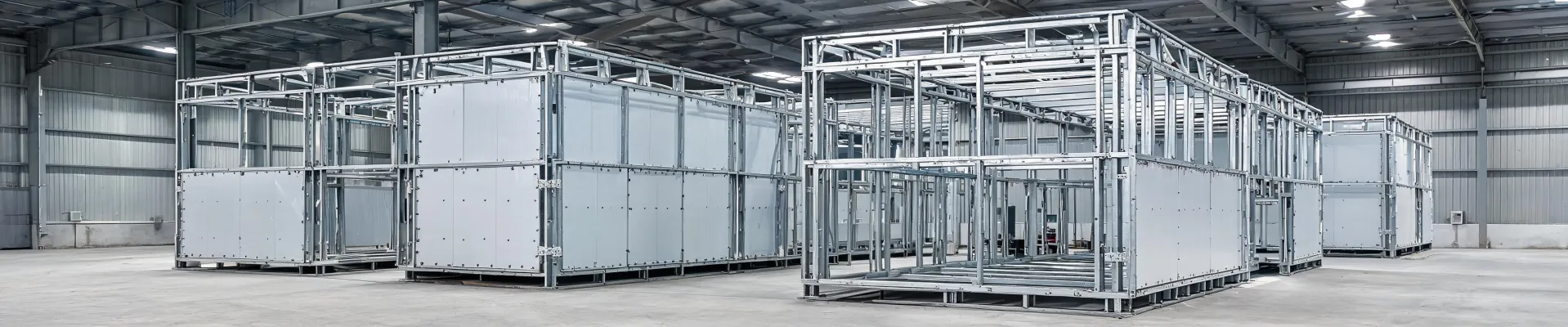
In early 2023 we needed the 6-bay unit—24×60 feet, Euro-style panel construction, built for a 14-month site reinstatement. Three quotes came back.
Quote A: $71,400. Quote B: $89,800. Quote C: $94,200.
I nearly signed A. It was roughly 20% below the middle bid. Finance would've thrown me a parade. Then I called two of A's reference accounts and asked what their final invoice looked like compared to the original quote. Both told me 15–30% over. One said closer to 35%.
Here's what wasn't in Quote A:
- Freight from fabricator to site—$3,900, buried as "FOB origin" in the terms
- Crane and offloading—$2,200
- Foundation piers and leveling pads, not included, ran $4,800 against our site grade
- The electrical panel spec didn't match our utility's connection requirement—$1,100 to rework
- No modular tag documentation package for the local authority (more on that below)
Real number on A: around $84,400 once I priced the missing pieces back in. That's still $5,400 under B—but not the $18,400 the quote comparison suggested. And A still didn't include the occupancy documentation the inspector would accept, which meant another three weeks of paperwork before we could move people in. B's quote was 89.8 and included delivery, install consulting, and a tagged building.
So no, A wasn't cheaper. It was quoted cheaper. Different thing.
Spec sheets are shockingly good at meaning different things
I assumed "same specifications" meant the same building across vendors. Didn't verify. Turned out one vendor read "200mm panel" as EPS-filled, another as PIR core, and the third as mineral wool. All technically 200mm wall thickness. Completely different thermal performance and fire ratings. My insurance contact flagged it before I signed, but that was luck more than process.
We caught it by sitting down with our facilities lead and comparing line-by-line. Took two hours. Would've cost roughly $3,400 to upgrade the EPS version to meet our insurer's fire spec—assuming the insurer would've accepted the retrofit at all, which they later told me they wouldn't have without re-certifying the whole envelope.
Lesson I wrote into our procurement SOP: never compare spec sheets by section header. Compare by component, with tolerances quoted in writing. If a vendor can't or won't state their tolerances, that's information.
And here's the frustrating part of modular procurement that nobody warns you about: the same wall thickness means three different things across three vendor websites. You'd think a spec sheet would solve this. It mostly relocates the ambiguity somewhere less obvious.
Why "Morgan Buildings sourcing" keeps showing up in my search history
Honest moment that took me a while to figure out: when I started poking at search terms like Morgan Buildings sourcing and Morgan Buildings wholesale sourcing, I was looking for a shortcut. Some structural way to buy a modular unit cheaper than the next buyer walking in the door. That's not how it works with any supplier—Morgan Buildings included—unless you're actually bringing volume or matching your spec to a catalog standard unit the vendor already builds in batches.
What actually moves the number is spec alignment. Two buyers asking the same fabricator for the same 6-bay layout get wildly different prices if one request lists a standard electrical package and the other lists "to suit site requirements." Wholesale sourcing language sounds like it unlocks a price tier. In practice it mostly unlocks a conversation. That conversation is where the money lives.
Where volume genuinely matters: standardized components ordered as a batch. If you're coordinating a multi-site rollout with the same building type across all of them, a sourcing conversation earns its keep fast. For one 6-bay unit? The vendor treats you as a small order regardless of what your subject line says.
The counterargument, and the time it almost landed on me
I know how this reads. "Guy gets burned by a cheap building once, then evangelizes the expensive one forever." Fair. Except I've bought the pricier option too—and I've been wrong about which one would matter more than once.
In 2024 we needed a marketing showroom—a 3D modular building concept built out for a two-week event and kept afterward as a permanent demo unit. The premium option ran $52K above the next bid. The savings column looked strong; the risk was a rework cycle that overlapped a client launch we'd already invited 200 people to.
Calculated the worst case: a full redo at $38K plus a missed launch. Best case: saves $52K and the rework never materializes. The expected value said take the savings. My gut said no. I went with my gut.
Was that the right call? Honestly, I don't know—we'll never see the counterfactual. What I do know: the showroom opened on the date engraved on the invitations, the building's been in continuous use since August, and I've spent zero hours managing warranty calls on it. That's worth something. Just not something I can put on a spreadsheet.
Dodged a bullet there. So glad I insisted on a site visit to the fabricator before signing—almost skipped it to save a two-hour drive to their yard. Would've missed that their "in-house insulation" was actually a subcontracted line operating two counties away from where the frames were welded. Not necessarily a dealbreaker. Definitely a phone call I should've made earlier.
How I actually evaluate modular vendors now
Three years of getting this wrong has landed me on a checklist. Not exhaustive. Not going to save you from every bad actor. But it's the version I'd hand a new hire on day one:
- Occupancy documentation before price. In the U.S., relocatable modular buildings are typically permitted under state or local adoption of the IBC, while HUD-code manufactured structures (24 CFR 3280) are a separate federal category with a distinct tag. Some vendors blur the two. Ask which one applies to the unit you're buying before anyone quotes you a number.
- Itemized landed cost, in writing. Freight, crane, foundation, utility connection, permits—per building, not per contract. Price per square foot is fiction without this breakdown.
- Component-level spec comparison. Wall panel core material, roof deck, electrical panel make/model, window U-factor, and fire rating—by name. Not by brochure section.
- A reference call with exactly one good question. "Did the final invoice match the quote?" Everything else is small talk.
- A factory visit for anything over $80K. If you're crossing into 3D modular buildings with complex geometry or non-rectangular layouts, coordination at the fabricator matters as much as what they quote. Problems rarely show up on paper.
Two of those five items don't appear on a typical RFP template. That's the point.
A terminology detour I burned half a day on
Small side note, because it cost me an afternoon: if you search "who is building small modular reactors" while you're researching modular buildings, you will get 40 pages of nuclear energy coverage and zero procurement relevance. SMRs—small modular reactors—share the word "modular" and basically nothing else with a portable office building. There is no crossover unless your employer happens to hold a nuclear operating license.
I flag it because I've watched junior buyers disappear into three-hour research spirals when terminology drifts. If you're buying a building, search "modular office building," "prefab building," or "relocatable structure." If you're buying for a utility, that's a completely different conversation.
The part I keep coming back to
The cheapest modular quote I've approved in the last two years cost more—dollar for dollar, once everything landed—than the third-cheapest. Not because anyone lied. Because I priced the building instead of the delivery of the building.
I'm not saying go premium every time. I've taken the savings column more than once and been fine. I'm saying build the real landed spec first, price it second, and only then compare vendors. Do that and the cheap quote either becomes genuinely competitive or it disappears from the table. Both answers are useful. Neither is available if the first thing you do is sort by price.
Look—if your organization can survive a schedule slip and has a facilities team that catches spec drift early, go cheap. Genuinely. The math works. If your organization can't absorb a two-week delay in a room that has to be operational on a specific date, the lowest quote isn't a saving—it's a bet. I've been placing that bet for years. It lost twice and won once. I stopped playing because the one win wasn't large enough to justify the two losses, and I couldn't reliably predict which was which before signing.
That's the whole opinion. It isn't complicated. It was just expensive to learn.